Our Material Topics and Sustainability Approach
We continue to create value through our strengthened sustainability governance structure.
Our Sustainability Approach
Since our establishment on April 13, 1954, drawing strength from our foundation culture, we have adopted the principle of continuously adding value to our customers, employees, shareholders, and society by effectively and efficiently managing the assets and values entrusted to us, and we continue to act in a holistic manner with the global economy, in line with our country’s development goals, efficient in resource use, and supportive of the transition to a green economy.
Today, with the management and working approach required by modern banking, we serve our customers through the products and solutions we offer in the fields of Corporate, Commercial, SME, Retail, Public Institutions and Local Governments, and Agricultural Banking, as well as Retail and Private Banking. In addition to our basic banking products, we also engage in investment banking and capital market activities, and through our financial subsidiaries, we offer a wide range of financial products, from financial leasing to factoring services, to our customers with the high technologies required by the age. We also continue to play an active role in international markets with the long-term and cost-effective funds we secure from abroad.
In line with our sustainability vision, we aim to leave a more livable world for future generations. We remain committed to placing sustainability at the focal point of our corporate strategies and carry out all our activities within this framework.
Our Bank’s Board of Directors is the highest-level governance body responsible for sustainability performance, and sustainability-related issues are addressed starting from the Board of Directors level. Our Board of Directors is responsible for overseeing the sustainability strategy and ensuring the implementation of effective risk management so that climate and sustainability risks do not threaten our long-term interests, and it is supported by our Sustainability Committee and Sustainability Subcommittee for the effective and rapid management of sustainability practices.
Our Committee is responsible for creating sustainability strategies and policies in the economic, social, and environmental fields, as well as integrating these strategies and policies into the Bank’s activities and monitoring their performance. In addition, by decision of the Sustainability Committee, Sub-Working Groups with special expertise areas such as the Climate Risks and Environmental Social Risk Management Working Group, the Integrated Management Working Group, and the Science-Based Targets Working Group have been established under the umbrella of the Sustainability Subcommittee at our Bank. The relevant working groups are responsible for monitoring best practices and legislation in the world and in our country and for coordinating projects on this subject within the Bank. Furthermore, within the Bank’s organizational structure, we continue our sustainability efforts through the Sustainable Banking Department, the Environmental Management Department, and the Environmental and Social Impact Analysis Department, making our sustainability approach an integral part of our business processes. You can access our Sustainability Governance Structure here.
As part of our quality-oriented growth strategy, we aligned the banking processes of Head Office units and all branches with the ISO 9001 Quality Management System in 2017 and certified them with the “ISO 9001:2015 Quality Management System.” Additionally, by obtaining the ISO 14001:2015 Environmental Management System certificate in 2017, we also documented that we have minimized the direct environmental impact of our banking activities to a level compliant with international standards. In this context, with our efforts since 2018, we have ensured that all VakıfBank employees work in ISO 14001-certified buildings in 2025 as well.
By obtaining the ISO 45001 Occupational Health and Safety Management System certificate, we became the first bank in Türkiye to establish an Integrated Management System (ISO 9001-ISO 14001-ISO 45001) in 2021 and receive the certificate after the Integrated Certification Audit. Thus, we managed our quality, environmental, and OHS (Occupational Health and Safety) management systems under a single roof. By determining our energy policy, we continued our continuity in 2025 with the ISO 50001 Energy Management System certificate, which we included in our Integrated Management System in 2023 in line with our goals and objectives. In the 2025 surveillance audits, the practices carried out at our Bank were positively evaluated in the areas of effective process management, consideration of environmental and social impacts, energy efficiency, and occupational health and safety, and stood out as best practices under many headings. Additionally, as VakıfBank, we also hold the ISO/IEC 27001:2022 Information Security Management System Certificate and the ISO 27701:2019 PIMS Personal Data Management System certificate. You can access detailed information about our certificates here.
As a bank that has always considered its impact on society and the environment, not just focusing on economic results while carrying out its activities since its establishment, we see sustainable banking as a fundamental element of our strategy. Our environment and society-oriented projects, our digitalization vision, and our risk management practices in line with international standards form the cornerstones of our corporate governance approach. As VakıfBank, we resolutely apply our principles of transparency and accountability with our strong corporate governance structure.
We published our first TSRS-Compliant Sustainability Report in August 2025, in accordance with the Turkish Sustainability Reporting Standards (TSRS), which were put into effect by the decision of the Public Oversight, Accounting and Auditing Standards Authority (KGK) to be applied in accounting periods starting from January 1, 2024, and published in the Official Gazette dated December 29, 2023. You can access the relevant report here. In our report, which was prepared by evaluating the entire value chain including VakıfBank’s main field of activity, banking, as well as its subsidiaries and affiliates, we disclosed our sustainability governance, our financially material climate risks and opportunities, and our strategies for managing these risks and opportunities, as well as our climate-related targets and metrics within the scope of the said standard. We prepare our Green Asset Ratio Reports in the periods requested by the legislation, within the scope of the Communiqué on the Calculation of Banks’ Green Asset Ratio, which was published by the Banking Regulation and Supervision Agency (BRSA) and came into force as of April 2025.
We published our first Sustainability Report compliant with the Turkish Sustainability Reporting Standards (TSRS) in August 2025.
With our sustainability efforts, we take part in international platforms, lead the sector by achieving firsts, and continue to integrate sustainability into our corporate strategy for a more livable future by improving our environmental, social, and governance performance.
To contribute to the fight against climate change, one of the most important global environmental problems of our time, we became the first Turkish state-owned entity to announce a carbon emission reduction commitment in 2019 by joining the Science Based Targets initiative (SBTi), a partnership between the CDP (Carbon Disclosure Project), the UN Global Compact, the World Resources Institute (WRI), and the World Wide Fund for Nature (WWF), which aims to enable companies to set emission reduction targets and, in particular, to guide the climate transition process in the private sector. In 2022, we determined our science-based targets for carbon emission reduction and completed our applications, and in 2023, we became the first Turkish Bank whose science-based targets were approved by SBTi.
As VakıfBank, the Science-Based Targets Working Group, affiliated with the Sustainability Committee we established in 2024, continues its efforts to support low-carbon financing to achieve SBTi targets, integrate ESG (Environmental, Social, Governance) criteria into our credit policies, and provide support and resources to our customers in reporting and reducing their greenhouse gas emissions.
In addition, we have initiated our efforts to achieve net-zero emissions by 2050. Aware of our responsibility to minimize the impact of the risks posed by climate change on humanity, we have placed sustainability at the focus of our strategies. In this direction, we continued our work in line with our Climate Transition Plan, which we published in 2023 and which includes our “Net-Zero Emissions” declaration, where we evaluated the change and transformation needs brought about by climate change in the broadest perspective.
Additionally, since 2015, we have been participating in the Carbon Disclosure Project (CDP), transparently presenting our strategies, performance, and how we manage risks and opportunities in the areas of water security, climate change, and deforestation to our investors and the public. In this context, in 2025, we maintained our ‘A’ rating, the highest evaluation level, in the Water Security Program of the Carbon Disclosure Project (CDP) evaluations, where more than 22,100 organizations worldwide shared their data, by preserving our sustainable and consistent performance. In the Forest Program, which we responded to for the first time, we were entitled to receive the highest score of ‘A’ in line with our strong governance structure, comprehensive risk and opportunity management approach, and strategic practices, thus advancing our environmental performance in a multi-dimensional way. In the Climate Change Program, we received a ‘B’ rating. Thus, we achieved the success of being included in CDP’s 2025 Global A List in the Water Security and Forest programs.
Conscious that our greatest environmental and social impact is created through financing, we see it as our responsibility to evaluate the environmental and social impacts of the projects we finance. With the Environmental and Social Risk Management System (ESMS) we established in 2022 to evaluate and manage non-financial risks such as environmental, social, governance, and occupational health and safety, and their potential impacts for project finance loans of USD 20 million and above, as of August 2025, we began to evaluate Project Finance loans with an investment amount of USD 10 million and above. With this step, our Bank evaluates the environmental and social risks of a broader loan portfolio in line with international standards such as the IFC Performance Standards (IFC PS) and the Equator Principles (EP), proactively manages these risks, and has the opportunity to increase its compliant assets within the scope of the Communiqué on the Calculation of Banks’ Green Asset Ratio. In the future, in addition to project finance loans, we aim to include the entire loan portfolio, excluding retail loans, in this risk analysis process.
As a leading and active bank in international markets, we act with the awareness of the importance of sustainable banking in accessing international funding sources. In 2025, we continued to support sustainable development with our responsible financing approach by securing approximately USD 2.8 billion in new sustainability-themed resources.
As in previous periods, in 2025, we continued our efforts to channel the resources we obtained through financing instruments to projects that provide benefits for the environment and society. You can access our “Sustainable Finance Framework,” which we updated in 2023 by obtaining a Second-Party Opinion (SPO) from Sustainalytics, one of the world’s leading firms, and which increases the capacity of our sustainable products and services, here.
We continue our collaborations on national and international platforms as part of our efforts to create value in the areas of a sustainable economy, society, and environment. We are among the participants of the UN Global Compact, the world’s largest sustainability initiative, and we are the first Turkish state-owned entity to be a signatory of the Women’s Empowerment Principles (WEPs).
GRI 2-22, 2-29, 3-1
WE VIEW OUR PRIORITIES AS THE STARTING POINT OF OUR SUSTAINABILITY APPROACH.
In 2025, we voluntarily participated in the Corporate Sustainability Assessment (CSA) Survey prepared by S&P Global, which we believe will form the basis for our sustainability performance and guide us in improving it.
In 2025, we were evaluated by JCR Eurasia Rating under four main headings: “Shareholders,” “Public Disclosure and Transparency,” “Stakeholders,” and “Board of Directors.” As a result of the evaluations, we achieved a very high level of compliance with the CMB’s Corporate Governance Principles. We received a score of 9.43 for our compliance with the CMB’s Corporate Governance Principles and maintained our place in the BIST Corporate Governance Index in 2025, which we joined in 2023. We have maintained our place in the BIST Sustainability Index since its creation in 2014. Additionally, we have been included in the FTSE4Good Emerging Markets Index, which is closely followed by responsible investors, since 2017.
On April 21, 2025, we published our book titled ‘Corporate Sustainability Reporting: A TSRS Application Guide,’ prepared in collaboration with Sakarya University, through VakıfBank Culture Publications. As employees of the Bank, we authored the sections “Sustainable Finance,” “Sustainability from an Environmental, Social, and Governance Perspective,” and “Other Important Developments in Corporate Sustainability Reporting” in the book. Additionally, as part of the “SCIENCE&FUTURE: Science for Stronger Societies” project and as a component of the European Union’s Green Deal Strategy, we participated as a project stakeholder in the ‘European Researchers’ Night’ event on September 26, 2025, in partnership with Kocaeli University, Düzce University, and Sakarya University. In addition, within the scope of SCIENCE&FUTURE, a regional project, we delivered presentations on sustainability and finance at high schools jointly selected by the project stakeholders.
Furthermore, to strengthen our corporate approach to gender equality, we joined the Target Gender Equality Accelerator (TGEA) program, run by the UN Global Compact, in 2025. While evaluating our efforts in training, development, supply chain, and social contribution from this perspective, we also raised employee awareness and monitored progress with measurable indicators. This approach helped us to systematically address our current practices and clearly identify areas for improvement. We conducted the goal-setting activities within the program with the active participation of our relevant internal stakeholders. We compiled information on the policies and activities implemented across the Bank and conducted a current situation analysis from a gender equality perspective. We aim to track progress by repeating our analyses annually. We plan to complete the Action Plan, which will be developed based on our findings, in 2026.
Our Integrated Annual Reports, which include our value creation model along with our approach and performance in economic, environmental, and social areas in addition to our financial performance, are compliant with the Integrated Reporting Framework published by the Value Reporting Foundation.
Double Materiality Analysis
To integrate its sustainability approach into strategic decision-making processes and to assess stakeholder expectations from a holistic perspective, the Bank addressed sustainability topics that could arise throughout its operations and value chain. We evaluated these topics from the perspectives of both the impact of the Bank’s activities on the environment and society (impact materiality) and the potential reflections of sustainability-related risks and opportunities on the Bank’s financial performance (financial materiality).
For impact materiality, we identified the actual and potential impacts we have or could have on the environment, society, and human rights through our operations, products, and services.
For financial materiality, we assessed the potential effects of risks and opportunities arising from sustainability topics on the Bank’s cash flows, asset value, cost of capital, and financial position.
In determining the scope of the study, we structured the set of material topics in line with the European Sustainability Reporting Standards (ESRS), considering relevant international best practices and industry analyses.
As part of the impact materiality assessment, we presented a set of 20 identified material topics through surveys to our stakeholder groups, which include senior management, employees, subsidiaries and affiliates, shareholders, investors and financial analysts, customers, regulatory and supervisory bodies, banks and other financial institutions, unions, suppliers, industry organizations, memberships and non-governmental organizations, universities and research institutions, the media, and the community, and we collected their assessments. We used the feedback obtained through the surveys as input for shaping the Bank’s impact materiality analysis and identifying material impact areas.
We conducted the financial materiality assessment based on the evaluations of relevant internal teams and senior management, in line with the Bank’s strategic direction and long-term targets.
As a result of our assessments, we identified nine of the 20 material topics analyzed as material for the Bank and included the impacts, risks, and opportunities related to these topics within the scope of our reporting. Based on our internal assessments, the materiality ranking of these topics has been determined; this ranking serves as a complementary output that reflects the Bank’s strategic focus areas, objectives, and management evaluations, beyond quantitative threshold values.
Evaluation of Analysis Results
The material topics that determine VakıfBank’s sustainability roadmap for 2025 have been mapped with an integrated perspective on the Double Materiality Matrix, which was created by synthesizing stakeholder feedback and senior management assessments. The horizontal axis (X) of the matrix represents the financial impact of the topics on the Bank, with the magnitude of the financial impact increasing from left to right. The vertical axis (Y) shows the environmental and social impact of the topics, with the level of impact increasing from bottom to top.
GRI 2-22, 2-29, 3-1
Our Material Topics
System Continuity and Data Security
Proactive Risk Management
Combating Climate Change and Environmental Compliance
Customer Experience and Satisfaction
Digital Transformation, Innovation, and Artificial Intelligence
Employee Engagement and Satisfaction
Sustainable Finance and Development
Stakeholder Engagement
Responsible Supply Chain Management
Impacts, Risks, and Opportunities Related to Our Material Topics
| Material Topics | ESRS Link | Impact on Environment and Society | Financial Impact | ||
| Positive Impact | Negative Impact | Risks | Opportunities | ||
| System Continuity and Data Security | ESRS S4: Consumers and End-users (Primary Impact) ESRS E1: Climate Change (Secondary Impact) ESRS E5: Resource use and circular economy (Secondary Impact) |
Secure and uninterrupted banking services enable customers to conduct their financial transactions safely and avoid financial losses. | Intensive infrastructure investments, increased energy consumption by data centers, and environmental damage from electronic waste contribute to an increased carbon footprint. | Cyberattacks, data breaches, or system outages can cause disruptions in banking services, leading to decreased customer satisfaction, customer churn, and a decline in transaction volume. Such events can also result in regulatory sanctions, compensation and litigation costs, and additional operational expenses, creating negative pressure on the bank's financial performance and reputation. | In the long term, it can increase revenue by enhancing customer trust and loyalty and can prevent potential operational costs. |
| Combating Climate Change and Environmental Compliance | ESRS E1: Climate Change | Financing that supports renewable energy, energy efficiency, low-carbon projects, carbon reduction, waste management, and recycling contributes to reducing greenhouse gas emissions. By supporting sustainable development and climate transition goals, it not only provides environmental benefits but also helps create a social impact. | Financing high-carbon-intensity sectors can lead to an increase in indirect greenhouse gas emissions through financed portfolios, causing a negative impact on the environment. | Increased physical risks from climate change (floods, droughts, extreme weather events) can adversely affect the operations and revenues of borrowing businesses, weakening their loan repayment capacity. Additionally, secondary effects of climate change, such as rising insurance premiums and potential supply chain disruptions, can increase costs for businesses in climate-sensitive sectors, disrupting their cash flows and negatively impacting the Bank's financial performance. | The growing need for green investment during the transition to a low-carbon economy presents new financing opportunities for the bank in renewable energy and climate adaptation projects. |
| Employee Engagement and Satisfaction | ESRS S1: Own workforce | Practices that support employee well-being, development, and work-life balance enhance employee motivation and psychological well-being, contributing to the promotion of healthier and more respectful working conditions that uphold human rights. | High workloads, stress, and inadequate support mechanisms can negatively affect the physical and mental well-being of employees, potentially increasing job dissatisfaction. | Decreased employee satisfaction can lead to the loss of skilled labor and increased employee turnover rates, which can have negative financial impacts on operational efficiency and service quality. | High employee engagement can support the bank's long-term performance and competitiveness through increased productivity and the retention of institutional knowledge. |
| Customer Experience and Satisfaction | ESRS S4: Consumers and End-users | Individuals who receive fast, easy, and reliable access to services that meet their expectations and needs feel valued as a result. | Service interruptions, complex product structures, or inadequate information can prevent customers from using financial services effectively, leading to a loss of trust and dissatisfaction. | Decreased customer satisfaction can lead to customer churn and damage to the bank's reputation, which can have a negative impact on the Bank's financial performance. | High customer satisfaction and a strong customer experience can increase customer loyalty, thereby boosting the bank's market share and revenue potential. |
| Stakeholder Engagement | ESRS S1: Own workforce ESRS S2: Workers in the value chain ESRS S4: Customers and End Users |
Establishing regular, transparent, and constructive communication with stakeholders helps to understand their expectations and incorporate their feedback into decision-making processes, thereby strengthening trust-based relationships and increasing stakeholder confidence. | Failure to effectively address stakeholder feedback can lead to misalignments between societal expectations and the products and services offered, potentially creating negative social impacts on stakeholders. | Ineffective management of stakeholder expectations can lead to reputational damage and increased complaints, posing risks of customer churn, weakened investor confidence, and indirect financial pressures. | Strong stakeholder engagement mechanisms can enhance stakeholder trust, fostering the development of long-term collaborations, strengthening customer and investor loyalty, and supporting the bank's sustainable growth potential. |
| Digital Transformation, Innovation, and Artificial Intelligence | ESRS S4: Customers and End Users ESRS E1: Climate Change (Secondary Impact) ESRS E5: Resource use and circular economy (Secondary Impact) |
Digital banking solutions facilitate access to financial services, offering customers a fast, secure, and seamless service experience. | Digitalization can create access barriers for customers who cannot keep up with technological advancements, while also environmentally increasing energy consumption and causing high carbon emissions due to electronic waste. | In situations like power and network outages, the inability to process transactions and security vulnerabilities can lead to data loss, resulting in operational expenses. Additionally, complex security steps can create negative user experiences, leading to customer churn. | Artificial intelligence and automation applications can provide the bank with a cost advantage by increasing operational efficiency. At the same time, a diversified product range increases the number of customers and revenue. |
| Responsible Supply Chain Management | ESRS S2: Workers in the value chain ESRS E1: Climate change |
Business practices and supply chain approaches that respect human rights contribute to supporting fair labor conditions and strengthening social trust. Furthermore, working with suppliers who contribute to improving environmental performance has a positive impact on the environment. | Human rights violations that may occur in financed projects or within the supply chain can lead to serious negative social consequences for affected employees and communities. Moreover, selecting suppliers with high emissions and polluting practices creates negative environmental impacts. | Supplier selection can disrupt business continuity, causing revenue loss. It may lead to an increase in the Bank's emissions data and be perceived negatively by investors, potentially increasing borrowing costs. This would have adverse effects on profitability and financial performance. | The Bank's ESG-focused supplier selection can enhance its reputation among investors, potentially lowering funding costs. It is also important for business continuity and has positive effects on profitability and financial performance. |
| Proactive Risk Management | ESRS G1: Business Conduct | Risk management practices aimed at the early detection of credit, climate, and operational risks support the continuity of financial services, contributing to safe access to finance for individuals and the real sector. | An increased tendency toward risk aversion can make it harder for vulnerable sectors or small-scale enterprises to access financing, potentially deepening economic exclusion and inequality. | Failure to adequately foresee and holistically manage risks can lead to deterioration in the credit portfolio in the face of economic fluctuations and shocks, adversely affecting the bank's financial resilience. | Advanced and integrated risk management approaches can enhance the bank's resilience during periods of uncertainty, allowing for the limitation of credit losses and the continuity of profitability. |
| Sustainable Finance and Development | ESRS E1: Climate change | Supporting projects aligned with environmental and social goals through sustainable-themed financing contributes to accelerating the low-carbon transition and increasing positive social benefits for society. | - | - | Sustainable-themed funds obtained from international financial institutions and the expansion of green product diversity (e.g., green loans, carbon reduction-based financing instruments) can support access to low-cost, long-term resources, thereby strengthening the product-portfolio balance. At the same time, it can enhance resilience against regulatory compliance risks, strengthen customer relationships, and contribute to supporting a long-term competitive advantage. |
GRI 2-22, 2-29, 3-1
VakıfBank’s material topics are regularly monitored within the scope of sustainability management and risk management processes and are managed within the framework of relevant policies and practices.
Management and Monitoring of Material Topics
The topics VakıfBank considers material are directly related to the Bank’s strategic goals and operational activities. These topics are regularly monitored within the scope of sustainability management and risk management processes and are managed within the framework of relevant policies and practices. The effectiveness of these practices is monitored through internal control and audit mechanisms, and necessary improvements are made under the supervision of senior management and relevant committees.
System Continuity and Data Security: In an era of increasingly complex cyber threats, the uninterrupted operation of information systems and data security are strategic priorities for VakıfBank. The Bank protects the confidentiality of customer data with AI-powered security operations centers and advanced encryption technologies, and continuously updates its technological infrastructure with the goal of 100% system continuity.
This material topic is discussed in detail in the Intellectual Capital section.
Proactive Risk Management: An integrated risk management approach is adopted, encompassing not only traditional financial risks but also climate and cyber risks. Potential risks are identified in advance through early warning systems and stress tests, thereby safeguarding the bank’s financial health and operational resilience.
This material topic is discussed in detail in the Human Capital section.
Combating Climate Change and Environmental Compliance: Taking a proactive stance against the climate crisis, VakıfBank is taking decisive steps to reduce its operational emissions and become a carbon-neutral bank. Its environmental footprint is meticulously managed in line with the Science Based Targets initiative (SBTi) and international standards.
This material topic is discussed in detail in the Natural Capital section.
Customer Experience and Satisfaction: Guided by the principle of ‘Customer Focus,’ VakıfBank aims to provide a seamless and personalized service across all channels. Through feedback mechanisms and customer journey analyses, the bank develops projects that continuously increase customer loyalty.
This material topic is discussed in detail in the Social and Relational Capital section.
Digital Transformation, Innovation, and Artificial Intelligence: Building the future of banking with digitalization and innovation, VakıfBank is redefining the customer experience with artificial intelligence, robotic process automation, and its digital assistant, ViBi. This transformation, which increases efficiency, enhances the bank’s competitiveness and operational speed.
This material topic is discussed in detail in the Intellectual Capital section.
Employee Engagement and Satisfaction: Viewing its employees as its most valuable asset, VakıfBank strengthens employee engagement through flexible benefits, development-oriented performance systems, and well-being initiatives. A happiness-oriented work environment is targeted through a management approach that listens to the voice of its employees.
This material topic is discussed in detail in the Human Capital section.
Sustainable Finance and Development: To support the green transformation of the national economy, VakıfBank prioritizes financing for renewable energy, energy efficiency, and circular economy projects. Thematic resources from international financial institutions provide a direct contribution to sustainable development goals.
This material topic is discussed in detail in the Financial Capital section.
Stakeholder Engagement: VakıfBank integrates the expectations and opinions of its stakeholders into its strategic decision-making processes. Trust-based collaboration with all stakeholder groups, from investors to employees, is continuously strengthened through transparent and two-way communication channels.
This material topic is discussed in detail in the Social and Relational Capital section.
Responsible Supply Chain Management: Viewing its suppliers as part of its sustainability journey, VakıfBank prioritizes environmental and social criteria in its procurement processes. Supporting local suppliers and adhering to supplier codes of conduct form the foundation of responsible supply management.
This material topic is discussed in detail in the Social and Relational Capital section.
As VakıfBank, we align our material topics with the UN SDGs and transparently share our contribution to the Sustainable Development Goals.
The Relation of Our Material Topics with Capital Elements and UN Sustainable Development Goals*
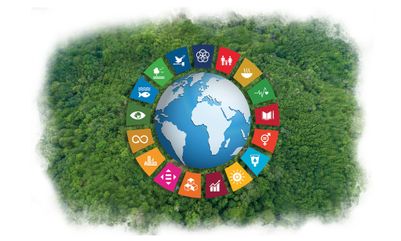
The Sustainable Development Goals (SDGs), adopted in 2015 by 193 United Nations (UN) member states, represent a call to action for the shared future of our planet. The UN Sustainable Development Goals are among the guides for our sustainability approach, and within this scope, we prioritize contributing to the targets of the UN SDGs through our activities.
As VakıfBank, we align our material topics with the UN SDGs and transparently share our contribution to the Sustainable Development Goals.
| Material Topics | Relevant UN Sustainable Development Goal | Relevant Capital Element |
| Employee Engagement and Satisfaction | 4, 5, 8, 10 | |
| Environmental Impact Management | 6, 13,14, 15 | |
| Digital Transformation, Innovation, and Artificial Intelligence | 8, 9, 12,17 | |
| Equal Opportunity, Diversity, and Inclusion | 4, 5, 8, 10 | |
| Financial Inclusion and Accessibility | 8, 9, 10 | |
| Financial Literacy | 4,8 | |
| Combating Climate Change and Environmental Compliance | 6, 13, 14, 15 | |
| Human Rights | 8, 10, 16 | |
| Business Ethics, Legal Compliance, and Transparency | 10, 16 | |
| Capacity Building and Talent Management | 4, 5, 8, 10 | |
| ESG Impact in Lending Processes | 5, 8, 10, 13 | |
| Corporate Governance | 8, 16, 17 | |
| Customer Experience and Satisfaction | 8, 9, 17 | |
| Stakeholder Engagement | 8, 9, 16 | |
| Proactive Risk Management | 8, 16, 17 | |
| System Continuity and Data Security | 8, 9,17 | |
| Responsible Supply Chain Management | 8, 12, 16 | |
| Sustainable Financial Performance | 8, 10 | |
| Sustainable Finance and Development | 8, 9, 10, 12, 13 | |
| Social Responsibility and Social Impact | 4, 5, 10, 17 |
*In alphabetical order according to the material topic in the table.
GRI 2-22, 2-29, 3-1, 3-2