Our Human
Capital

Risks Opportunities
Employee complaints regarding performance management and remuneration processes Being preferred by new graduates
Failure to ensure the effectiveness of occupational health and safety practices Increasing employee loyalty and satisfaction with in-house activities
Dissatisfaction among employees regarding equal opportunity and diversity issues Proactive risk management approach
Problems in organizational backup plans for critical positions A work environment that preserves the balance of work-family life so that employees can benefit from career opportunities equally
Failure to achieve desired efficiency from training programs Filling senior positions through the internal promotion process
Increasing competencies with new training and development programs
Promoting personal development
Ratio of Female Employees 52.04%
Female Employees’ Average Seniority in Years 10.21 years
Average Training Time per Employee 39.49

Material Topics & SDGs

Employee Engagement and Satisfaction

SDGs: 4, 5, 8, 10

Equal Opportunity, Diversity and Inclusion

SDGs: 4, 5, 8, 10

Capacity Building and Talent Management

SDGs: 4, 5, 8, 10

GRI 3-3


Employee Engagement and Satisfaction

WE ARE DRIVEN BY OUR SENSITIVITY TOWARD EMPLOYEES’ HAPPINESS.

Employee Turnover Rate 2.36
Average Years of Seniority 10.02

It has been subjected to limited assurance by the Independent Audit Firm.

Recognizing that our human resources are the Bank’s most valuable capital, we direct our efforts toward increasing employee engagement and satisfaction, and we create roadmaps to continuously improve satisfaction.

We are aware that high employee engagement contributes to a low employee turnover rate. Our employee turnover rate was 2.36% during this period, while our voluntary employee turnover rate was 2.07%. Additionally, we identify areas for improvement in our processes by considering our employees’ feelings and thoughts; we aim to increase employee engagement and satisfaction by supporting development in these areas.

We always act with an awareness of our employees’ well-being. With our employee experience-focused approach, we continue to implement practices aimed at contributing to our employees’ engagement and satisfaction, increasing their motivation, and making them feel the privilege of being a part of VakıfBank. We recognize how important it is to maintain close communication with employees and how it affects their happiness. Based on this, we conducted face-to-face “Employee Experience Meetings” with over 2,000 of our employees at our Head Office Units and 26 Regional Directorates in 2025. These meetings provided us with the opportunity to listen to our employees on-site. Furthermore, we aim to continue our visits in 2026 to meet with our employees and share our ideas.

We closely follow new-generation human resources practices. In this context, we implemented many innovations for our Bank in 2025 to maximize employee satisfaction and engagement and to realize our innovations in line with our employees’ expectations. In line with the changing trends in work life and our employee-centric approach, we adopted a casual dress code on Fridays, opting for more comfort on the last business day of the week. Additionally, we launched a new communication channel—the “HR Support Line”—to quickly and effectively manage and strengthen communication between the Human Resources Directorate and employees at our branches and units.

We operate with the awareness that employee happiness is the foundation of customer satisfaction. In line with this, we continued to actively use our internal communication channels to make our colleagues feel happy and valued, and to enable them to develop their skills in areas outside banking. As part of our internal communication strategy, in 2025 we continued to organize activities aimed at supporting our employees’ participation in community life.

Furthermore, as always, we act with an awareness of our employees’ well-being. We continued to organize VMeets events via online meeting applications to inform our Bank’s employees about topics such as banking, innovation, leadership, management, personal integrity, and the agendas of Türkiye and the world. While continuing the activities of our BizimYerimiz Portal, which allows our employees to easily access internal information, we launched the BizimYerimiz Portal mobile application, which our staff can use without a VPN, to facilitate the adoption of our digitalization strategy and to provide access to all current news, announcements, opportunities, and events related to our Bank anytime, anywhere. Additionally, through VTube, our corporate video viewing platform that gathers all video content prepared for our Bank under one roof and implements our “Digital Makes It Easier” approach, we reached a total of 984 hours of viewing time.

To discover our common values, strengthen the sense of corporate belonging, and reinforce team spirit, we held the second annual “Values in Communication Day” event, planned to be celebrated every year on December 12. Through the event, we aimed to have our employees adopt the values that form the basis of our corporate culture and reflect them in their daily work practices. In preparation for the event, we prepared the “Values of Communication” booklet by gathering the opinions and contributions of our colleagues. In line with the values in the booklet, we organized discussions framed around dilemmas aimed at increasing our employees’ awareness and encouraging them to reflect on values. We positioned this event not merely as an awareness initiative but as an important activity that strengthens our approach to a sustainable corporate culture and enhances the employee experience.

Additionally, in line with our customer-focused service approach, we made achievements visible by presenting awards to our employees who made a difference in the customer experience. Through this, we aimed to support a culture of success and increase employee motivation.

At the VakıfBank B’iz Museum, which we opened in 2024 and which carries traces of our journey from 1954 to the present, featuring banking equipment and personal collections from our employees and retirees, we hosted thousands of visitors again in 2025.

As part of our Internal Communication strategy, we continued our in-house corporate social responsibility activities 2025 with our “Goodwill Ambassadors,” a group of Bank employees who volunteer their time.

We provide a work environment where our employees feel happy and secure, enabling them to look to the future with confidence and experience the privilege of being part of VakıfBank. In the upcoming period, we plan to develop projects that will contribute more to sustainability, expand our internal social responsibility projects, benefit more people, and identify our volunteer ambassadors by increasing the number of colleagues participating in our projects.
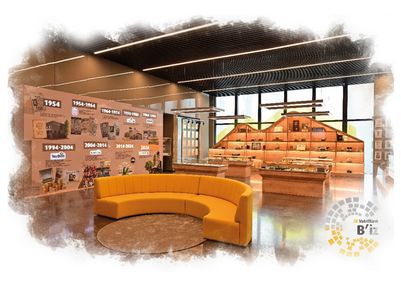
Employee Engagement and Satisfaction

2025 events

  • Our 15 social clubs, established in three provinces to contribute to the development of our colleagues, continued their activities in 2025, growing even larger with new colleagues who joined us. Through concerts, shows, exhibitions, and tournaments they participated in representing our Bank, our employees successfully demonstrated the results of their work throughout the season.
  • As part of the “Finance at the Museum Project,” which we launched in 2025, we spoke with elementary school students about finance and banking at the VakıfBank B’iz Museum. We also gave the students a tour of our museum, explaining the history of finance and technological developments in age-appropriate language.
  • After our Goodwill Ambassadors completed writing sustainability-themed books, we continued our school visits with colleagues who received storytelling training.
  • We continued our in-house corporate social responsibility (CSR) campaigns with our Goodwill Ambassadors. Thanks to the Goodness Piggy Bank campaigns carried out with the participation of our employees, we delivered items such as books for public school libraries, stationery for students, and educational toys. Additionally, during a shelter visit we organized, we delivered pet food collected through contributions from our employees to our furry friends.
  • On October 31, 2025, we opened the VakıfBank Art Gallery with an exhibition of works by photographer Ara Güler. In our gallery, which is the first art gallery in the Financial Center, we will continue to support art and artists, and bring different art forms and artists together with art lovers and our employees.
  • As part of our annual “Notice the Yellow” Childhood Cancer Awareness Day communication efforts, we carried out activities at our Bank aimed at increasing awareness. We held blood and stem cell donation events with the Turkish Red Crescent. We hosted sales events for non-governmental organizations at our Head Office Building.
  • In 2025, we continued the “A Forest for Every Year” sapling donation campaign, which has been running since 2019 and encourages our employees to contribute to nature and green spaces.
  • To support the plastic cap campaign run by TOFD (Turkish Spinal Cord Injury Association), we collected 2,300 kg of plastic caps through our employees, which provided wheelchairs for three people in need. Additionally, through the wheelchair assembly event we held with TOFD, we raised awareness among our colleagues and were delighted to deliver the 10 wheelchairs we assembled to people with disabilities.
  • With the Report Card Festival, we organized for our employees’ children at the end of the school year, we were once again reminded that we are part of a large family with our colleagues.
  • As part of Sustainable Banking, we provided all our employees with corporate promotional materials that have recycled covers and are made of FSC-certified paper. We also sent technological and useful “Welcome Kits” made from recycling products to our new colleagues starting at our Bank.
  • Additionally, as part of the employee life cycle, to make our colleagues feel our support at every moment, we sent a VakıfBank Sports Club mini jersey as a “newborn gift” to colleagues who had a new baby. We continued our practice of creating a “condolence letter” signed by the General Manager and a “sapling donation certificate” upon the death of a first-degree relative. We also continued sending a “Retirement Kit” gift (coffee cup + Turkish delight holder) to thank them for their service as they transition into retirement.

GRI 3-3, 403-6


Human Rights, Equal Opportunity, and Diversity

WE PROVIDE EQUAL OPPORTUNITY AND RIGHTS TO EMPLOYEES.

Female Employee Rate 52.04%
Male Employee Rate 47.96%

It has been subjected to limited assurance by the Independent Audit Firm.

Within the framework of our sustainable banking approach, our goal is to establish a modern workplace that respects human rights and to disseminate this understanding to raise awareness among employees, customers, and stakeholders.

At VakıfBank, we make every effort to fulfill the requirements of the Labor Code, the United Nations Universal Declaration of Human Rights, the core principles of the International Labor Organization, as well as other international treaties to which Türkiye is a party. Furthermore, in accordance with our Human Rights Policy, we do not finance the activities or projects of individuals and organizations that are found to engage in activities prohibited or restricted under national legislation or under international conventions to which Türkiye is a party, that employ child labor, or that otherwise violate human rights. Accordingly, we adopt an inclusive and fair approach for all by protecting and promoting human rights. We place human rights at the core of all our activities, from operations and supply chains to our stakeholder relationships.

We provide employees with equal opportunities and rights, in line with the importance we place on equality and diversity. In this regard, we follow the principles of the United Nations Universal Declaration of Human Rights, the United Nations Sustainable Development Goals (SDGs), and the International Labor Organization (ILO) as guides in our people-centered human resources practices. We are a signatory to the United Nations Women’s Empowerment Principles (WEPs).

In addition, as a signatory of the Equality at Work Declaration—prepared under the leadership of the Ministry of Family, Labor, and Social Services in cooperation with the World Economic Forum—we support the active participation of women in all areas of social and economic life on an equal rights basis. We support women’s participation in the workforce through our female employees and strive to maintain a work environment where equality and workplace harmony prevail by taking the necessary measures to ensure the health, safety, and well-being of all our employees, both women and men. In this context, as of 2025, 52.04% of our employees and 24.38% of our employees in managerial positions across the Bank are women.

We ensure equal opportunities for all our employees in both recruitment and career development processes. In 2025, our female employees constituted 49.38% of those promoted to a higher position, and we aim to ensure they can benefit equally from career opportunities, thereby maintaining a work environment that preserves work-life balance. In this context, 100% of our 397 female employees who took parental leave in 2025 returned to work.

In addition to maternity leave, we offer our female employees the option of taking up to one year of unpaid leave and working part-time until their children reach five years of age. In 2025, 353 of our female employees who requested unpaid leave due to childbirth benefited from the right to unpaid leave granted by our Bank in addition to the 16-week statutory maternity leave. We also provide childcare assistance to all our employees, both women and men, who have children attending daycare in provinces with metropolitan municipality status. With all of our practices in this regard, we aim to offer mothers the opportunity to continue their careers from where they left off after their parental leave.

We offer our employees equal opportunities and rights in line with our principles of creating an inclusive working environment for all and preventing all forms of discrimination on the grounds of ethnicity, age, disability, social status, familial situation, etc., in working conditions and assignments.

We follow an approach that ensures our employees are not subjected to different treatment based on their characteristics and that promotes inclusivity in our relationships with business partners and society, reflected in both our comprehensive policies and procedures as well as in daily practices. With our Harassment and Violence Procedure, we aim to maintain a working environment where respect and trust prevail, free from pressure and violence, to prevent all kinds of harassment and violence within the organization, and to define the roadmap to be followed in case of such incidents.

GRI 3-3, 401-2, 404-3


Remuneration and Benefits

We aim to implement a motivating and fair remuneration policy based on merit, adopting a corporate culture, competitive, rewarding, based on balanced performance goals, encouraging sustainable success.

Ratio of Employees Covered by Collective Bargaining 84%

We increase our daily meal allowance according to current conditions, enabling our employees to benefit from lunch services under better terms.

We determine our remuneration policy within the bank based on the risk and responsibility assumed at all levels, provide fair remuneration, and offer fringe benefits while respecting our employees’ fundamental rights.

We determine the salaries of our executives and employees at all levels in line with the Bank’s internal balance and strategic goals. In this process, we adopt an effective remuneration policy and consider budgetary opportunities, job descriptions, responsibility levels, as well as individual performance and competencies. Furthermore, we prioritize the Bank’s compliance with internal and external regulations. In addition to their basic salary, we provide employees with additional payments such as duty compensation, foreign language compensation, licensing compensation, and specialization compensation, depending on their duties and responsibilities.

To contribute to our Bank’s growth, we closely monitor sectoral developments, conduct comprehensive data analyses, and regularly assess our position within the sector based on banking industry salary survey results prepared by independent organizations.

Bank personnel work under private law provisions and are employed in accordance with the provisions of Labor Law No. 4857, which are currently in force. Furthermore, we determine salaries and salary increases: for our in-scope employees, through the Collective Bargaining Agreement with the Bank, Finance and Insurance Workers Union (BASS); and for our out-of-scope employees, by resolution of the Board of Directors. This year, we signed the 27th Term Collective Bargaining Agreement covering the period from May 1, 2025, to April 30, 2027, and made improvements to our employees’ salaries, taking into account our country’s economic conditions. In 2025, the ratio of our employees covered by the collective bargaining agreements was 84%.

In addition to social assistance payments such as marriage aid, birth aid, disaster aid, and death and disability aid, we offer various leaves and facilities to meet basic needs. In addition to social benefits such as marriage benefits, maternity benefits, disaster benefits, and death or disability benefits, we offer opportunities to meet basic needs through various leaves of absence. We adjust the daily food allowance in line with current conditions and ensure employees have better access to lunch services. Beyond wages, we provide bonuses, performance premiums, and dividends. In doing so, we implement a motivating and fair remuneration policy based on merit, adopting a corporate culture that is competitive, rewarding, centered on balanced performance targets, and encourages sustainable success. Our Bank’s remuneration policy is available here.

Furthermore, we include our employees in the Group Pension Plan with Employer Contribution to support their retirement income, make contributions on their behalf, and provide life insurance coverage annually.

GRI 3-3, 401-2, 403-6


Safe Working Environment

WE HAVE MADE OUR INTEGRATED MANAGEMENT SYSTEM SUSTAINABLE.

With our Occupational Health and Safety (OHS) Policy, we consider providing our employees with a safe and healthy work environment as one of our fundamental responsibilities. To this end, we adopt full compliance with legal requirements and international standards in the field of OHS as a fundamental principle. In 2025, we successfully completed the Integrated Management System (ISO 9001, ISO 14001, ISO 45001, ISO 50001, ISO 10002) audits, ensuring the sustainability of the Integrated Management System.

We meticulously carry out Occupational Health and Safety (OHS) processes with the coordination of the Facility Management and Occupational Safety Department. You can access our Bank’s OHS Policy at from here. We guide all employees, including the staff at our Bank, as part of support service under the Occupational Health and Safety Policy. We reference European Statistics on Accidents at Work-ESAW methods to track OHS performance. When monitoring OHS performance, we reference the European Statistics on Accidents at Work (ESAW) methodologies. We carry out our processes by achieving the targets we planned as a result of the risk, threat, opportunity, and impact assessments conducted within the scope of Occupational Health and Safety (OHS).

In 2025, we conducted field visits to increase awareness throughout the Bank. In this context, we visited 44 of our branches across the country and held face-to-face meetings on Occupational Health and Safety topics with over 250 of our employees. In addition, we regularly offer in-class training and e-learning programs, and provide a one-day OHS training to every new employee as part of their orientation. In this context, we provided in-class OHS training to a total of 2,197 participants in 2025. We provided awareness training on the use of fully automatic, screen-equipped external defibrillators (AED) to employees who hold basic first aid training certificates.

In line with our proactive risk management approach, we mapped our Occupational Health and Safety (OHS) risks and, starting from the second half of 2025, our occupational safety specialists and workplace physicians conducted approximately 3,000 visits, carried out quarterly, at locations covering our Bank’s branches and units. As a result of these visits, we identified hazards and risks at each location and continued to take necessary precautions. We installed a state-of-the-art structural health monitoring system consisting of sensitive seismic sensors at our Bank’s location in the Istanbul Financial Center. Thus, our Bank became the first institution within the Financial Center complex to have a completed and operational structural health monitoring system. We completed the interior design and implementation of our building in the Istanbul Financial Center in accordance with LEED certification and ergonomic standards.

After the earthquake, we prioritized inspecting all branches in Istanbul for seismic safety, identified those we found inadequate, and initiated measures to enable them to operate from safer service premises as quickly as possible. We plan to expand this effort to all of Türkiye and complete it in 2026. Additionally, we have initiated earthquake early warning studies and are monitoring the earthquake early warning system installed at a pilot location. If the system operates reliably, we plan to expand the early warning system. We continued activities related to burglar alarm, fire alarm and warning, and security camera systems, including installation during new branch openings and branch renovations, repair of faults in existing systems, and regular maintenance. For fire safety, in line with workplace safety experts’ reports, we continued to meet needs of new fire extinguishers, replace those that were necessary with new units, and ensure their regular maintenance. As part of efforts to improve electronic security measures, we continued the practice of notifying branch managers by email and branch security officers by SMS of branch openings and closings to eliminate the risk that the alarm system would be disabled because the alarm code could not be entered or was forgotten during branch closings.

By migrating the work request processes for physical security (security guards), electronic security (alarms and security cameras), and fire extinguishers to the system, we ensured that requests are met more effectively and quickly. To ensure that the installation, maintenance and repair, and progress payment control processes of the electronic security system are carried out systematically, accurately, and more swiftly, we made improvements and enhancements to the software implemented at our Bank’s locations based on user feedback.

GRI 3-3, 403-1, 403-2, 403-3, 403-4, 403-5, 403-6, 403-7

Starting from the second half of 2025, our occupational safety specialists and workplace physicians conducted approximately 3,000 quarterly visits to our Bank’s branches and units.

Number of Employees Attending OHS Training - In-Class

2025 2024 2023 1,553 1,064 2,158

Number of OHS Training Beneficiaries - Online

2025 2024 2023 17,276 65,879 28,286

Total OHS Training Hours - In-Class

2025 2024 2023 10,845 8,512 15,839

Total OHS Training Hours - Online

2025 2024 2023 14,615 51,637 158,097

GRI 3-3, 403-1, 403-2, 403-3, 403-4, 403-5, 403-6, 403-7


Capacity Building and Talent Management

WE ARE A BANK TRAINING ITS OWN EXECUTIVES.

Number of Employees Promoted to a Higher Position 3,212
The ratio of Filling Top Positions with In-Bank Promotion 100%

It has been subjected to limited assurance by the Independent Audit Firm.

In this period when everything is changing rapidly, our Bank has adopted the philosophy of continuous development with a human-centered approach to achieve our strategic goals, keep up with the change, and gain a competitive advantage. In line with our human resources policy, we regard it as our most important mission to increase the motivation of our employees by prioritizing their needs and expectations.

We seek to manage our human resources effectively and efficiently, meet our employees’ personal development requirements, and support our Bank’s corporate growth through career management initiatives conducted with this understanding. At VakıfBank, we ensure that corporate strategic goals are translated into individual objectives via the Performance Management System to safeguard our employees’ corporate and personal development with an innovative approach and continuous learning, enhance solidarity and cooperation, and support their focus on corporate strategies. We are also resolutely continuing our efforts to develop our employees’ competencies to achieve our goals and be a leader in the sector. To support our employees’ career planning, we conduct a competency assessment once a year and analyze their individual training and development needs. In this context, 17,661 of our employees received a competency assessment in 2025. Additionally, we support continuous improvement by introducing enhancements to our performance management system each year so that our managers can make more accurate and objective assessments.

In 2025, we concluded a successful period in which our employees made a difference through their performance. During this period, 16,996 of our employees received a performance review. Based on individual performance evaluations that we conduct transparently and objectively, we presented performance achievement awards to our employees.

At VakıfBank, we support individual and corporate development by encouraging our employees’ continuous learning and innovative approaches and by strengthening a culture of collaboration and solidarity. With our Performance Management System, we aim to ensure our employees focus on the right priorities and achieve sustainable success by integrating our corporate strategic goals with individual goals.

As we develop our Corporate Performance Management System, we position the opportunities offered by technology as one of the fundamental components of our goal-setting methodology. In this context, in line with our advanced analytics approach, we are resolutely continuing our efforts to process data with advanced algorithms and use it effectively with artificial intelligence technologies.

In 2025, a total of 3,212 of our employees were promoted to a higher position, with 49.38% being women and 50.62% men. In line with our vision of being a Bank that develops its own managers, 17% of all our employees were promoted to a higher position in 2025.

In this context, in line with our Bank’s needs, we continue to work to identify employees with managerial potential who will play an important role in our Bank’s future, to ensure a fair competitive environment for their career development, and to support and make effective use of their talents and skills through training and development programs.

Effective and efficient management of human resources is one of our primary goals, and we aim to ensure optimal staffing levels based on workload. In this context, we have created systematic norm measurement models for both marketing and operations group employees in all our branches, using a combination of observation outputs, data analysis, and various measurement and evaluation methods. This allows us to determine daily norms based on fluctuating workloads.

Kapasite Geliştirme ve Yetenek Yönetimi

Changes within the organizational layout of the Head Office in 2025:

  • The Allocation Management units ensure the prompt and proper fulfillment of loan allocation requests, the establishment of effective allocation management, and the implementation of a unified allocation policy.
  • We made organizational changes in the Support Service Units to effectively manage processes related to our Bank’s service locations and occupational health and safety.
  • In parallel with the requirements and needs of the current conjuncture, we established new Units.

GRI 3-3, 404-3


Employee Development and Training

WE SUPPORT THE PROFESSIONAL, TECHNICAL, AND PERSONAL DEVELOPMENT OF OUR EMPLOYEES.

In-Class Training Hours Provided to Employees 374,002
Digital Training Hours Provided to Employees 382,188

In line with its human resources policies, VakıfBank adopts a holistic learning and development approach aimed at enhancing the professional, technical, and personal competencies of employees. Within the scope of this approach, we are creating a sustainable learning ecosystem that supports our employees’ adaptation to changing business requirements and the Bank’s strategic priorities.

We plan our training and development activities based on the results of training needs analyses conducted in line with the Bank’s strategies, organizational goals, and the competencies expected of our employees. Within the framework of the identified needs, we continuously support our employees’ development through in-class training, virtual classroom training, and digital learning solutions.

Taking a holistic view of our employees’ competency development, we structure our training and development programs under the following main headings:

  • “Orientation Training Programs” designed to support our new employees in adapting to our corporate culture, basic banking knowledge, and work practices and standards.
  • “Role Transition Training Programs” are designed to help employees transitioning to different roles and segments acquire the specific knowledge and skills required for their new positions.
  • “Development Programs” aimed at deepening our employees’ role-based professional and technical competencies, covering specialized areas such as foreign trade, corporate and commercial portfolio management, allocation processes, and internal trainer roles.
  • “Information Technology Training Programs” that support the development of employees working in the Information Technology field in areas of technical expertise, digital competencies, information security, and current technologies.
  • “Legal Responsibility Training Programs” aimed at increasing awareness and knowledge of legal obligations and corporate responsibilities according to employees’ roles, within the scope of compliance with legislation and regulations.
  • “Manager Development Programs” targeting the development of leadership, managerial competencies, and decision-making skills for employees in managerial positions and those newly appointed to managerial roles.

In 2025, we provided our employees with 374,002 hours of in-class training and 382,188 hours of digital training, for an average of 756,190 hours of training per employee. During this period, the average training hours per employee were 39.49.

To enable our Head Office employees to follow developments in their fields and to support a culture of continuous learning, we facilitated the participation of over 1,100 employees in training, conferences, and seminars organized by external institutions and organizations, in addition to the training offered within the Bank.

Furthermore, as a key component of our Bank’s training and development strategy, we have made digital training platforms from global content providers available to our employees to support fast and flexible access to information.

In our training processes, we apply a blended learning model that includes next-generation digital learning experiences. To monitor and evaluate the effectiveness of our training activities, we systematically analyze data obtained using QR code-supported digital measurement and assessment tools, and we regularly report on training outcomes and learning impact. Through this approach, we enhance the effectiveness of our training and development activities in line with sustainability principles and contribute to continuous development and improvement processes via data-driven feedback mechanisms.

OUR HIGHLIGHTED EDUCATIONAL PRACTICES IN 2025

Sustainability and ESG

Through training activities structured around sustainability and environmental, social, and governance (ESG) principles, we aim to increase our employees’ awareness and knowledge of the concept of sustainability. In this context, we provided a total of 33,466 hours of training by the end of 2025 with content tailored to specific target audiences.

To support the adoption of sustainability at both individual and corporate levels, we made the “Sustainability Training Series at VakıfBank,” specially designed for the Bank, available to our employees. Our Sustainability Series included digital training modules titled “Fundamental Concepts and Our Approach,” “Our Sustainability Performance,” “Sustainable and Responsible Finance at VakıfBank,” and “VakıfBank’s Sustainability Journey.” Through these training modules, we aimed at our employees to gain a holistic perspective on the environmental, social, and economic dimensions of sustainability.

In addition to the training offered as part of the sustainability training series, we made environmentally focused training available to our employees to increase their awareness in the areas of environmental and social responsibility, including topics such as “Climate Change,” “Water Awareness,” “Carbon Management,” “VakıfBank Environmental Management System,” “Zero Waste,” and similar topics.

Within the scope of the “Inclusive Communication with Individuals with Disabilities” training, we also offered the “Inclusivity in the Workplace” and “Human Rights” training modules, designed in coordination with relevant business units, to all our employees via our Training Portal, thereby increasing their awareness.

Additionally, as part of our collaboration in 2025, we opened the UN Global Compact training portal to our employees. We also ensured our employees’ participation in training on climate, sustainability, gender equality, and carbon footprint, particularly the 2025 Summit event.

Internal Trainer Development Program

As part of our Bank’s training and development strategy, we have an Internal Trainer Development Program to effectively disseminate in-house knowledge and experience, use the Bank’s resources efficiently, and strengthen our sustainable learning structure. With this program, we aim to develop the training competencies of our expert employees and strengthen our pool of internal trainers.

Within the program, we select internal trainer candidates based on strategic priorities and training needs and guide them through phased training stages. Following this process, our internal trainers take an active role in both in-class and digital training.

Through this approach, we increase the number of internal trainers at our Bank each year, supporting the sustainable transfer of in-house knowledge. Furthermore, by reducing the need for external resources, we ensure the effective use of the Bank’s resources and position the Internal Trainer Development Program as a strategic element of our training ecosystem.

By training subject, 43% of our training sessions were delivered by our internal trainers.

GRI 3-3, 403-5, 404-2

To strengthen the competencies of our employees newly appointed to managerial roles, we implemented a four-module New Manager Development Program.

Total Training Hours for New Managers 23,655
Total Sustainability Training Hours 33,466

New Manager Development Program

To strengthen the competencies of our employees who were newly appointed to managerial roles, we implemented a four-module New Manager Development Program. Through in-class training, digital learning materials, and the New Manager Podcast Set, we supported our managers in adapting to their roles quickly, competently, and confidently. In the first module of the program, we facilitated the sharing of experience and knowledge in sessions with the participation of senior management, and with the participation of our General Manager, we conveyed our corporate governance perspective to our new managers. In 2025, we conducted a total of 23,655 hours of training for our new managers.

End-to-End Development Journey in Corporate and Commercial Branches

We designed an end-to-end structured development journey to support the gradual and sustainable competency development of our employees working in Corporate and Commercial branches. With this journey, we offered a holistic structure that progressed from employees’ adaptation to duties and roles, through specialization, to the development of advanced portfolio management competencies.

In this context, we included our employees who completed the Basic Training Programs in the Role Transition Training Programs to support their adaptation to the positions they assumed. For employees who successfully completed the role transition process, we planned a Foreign Trade Development Program as a specialization area and certified the competencies of those who passed the end-of-program assessment.

We then enrolled our employees who had completed the specialization process in the Corporate and Commercial Portfolio Development Program according to their levels of experience and competency. At this stage, we supported them with advanced-level training on topics such as the new-era banking approach, risk management, and a holistic customer approach, and reinforced learning through practical exercises conducted using their own portfolios.

Through this development journey, we support our employees’ career development with systematically structured training and contribute to sustainable business results.

Allocation Management Development Program

To strengthen the risk management perspective and improve the decision-making quality of our employees involved in credit allocation processes, we organize training twice a year as part of the Credit Allocation Management Development Program. In this context, we provided 3,337 hours of training to a total of 300 participants in 2025.

Digital Content Production and Innovative Learning Practices

We enabled our employees to access digital training and content 24/7 through the Academy Training Platform. In 2025, we increased the platform’s content diversity by evaluating employees’ development needs, as identified and requested by our business units, and offered rapid training solutions through AI-supported content production processes.

In line with our focus on digital transformation and efficiency in our training and development processes, we produced approximately 65 training videos using in-house resources, leveraging AI-supported video content production applications and desktop video development tools. Thanks to this approach, we developed our training content quickly, flexibly, and tailored to specific needs, thereby supporting the effective and efficient use of the Bank’s resources by reducing our reliance on external sourcing. With the digital content produced, we ensured the active use of training programs to meet the learning needs of different target audiences.

Smart Training Management with Data Analytics

To manage training data transparently and effectively, we have digitized our reporting processes using data analytics platforms. Additionally, we have accelerated our training processes and increased efficiency by processing our digital training content through automated systems.

Share of Digital Training in Total Hours of Education(%)

2025 2024 2023 52.71 48.83 50.54

Average Training Hours per Employee

2025 2024 2023 39.44 45.90 39.49

It has been subjected to limited assurance by the Independent Audit Firm.

GRI 3-3, 403-5, 404-2


Recruitment of Young Talents

We aim to contribute to our mission of becoming the “Leading Bank of Strong Türkiye” by recruiting young and competent candidates who are suitable for the vision and mission of our Bank.

Number of Employees Who Joined the VakıfBank Family in 2025 1,428
Total Number of Employees as of Year-End 2025 19,147

In our recruitment processes, we aim to contribute to our goal of being the “Leading Bank of Strong Türkiye” by incorporating young and talented candidates who align with our Bank’s vision and mission into our team. To enhance the effectiveness of our assessment process, we use structured interview questions aligned with position requirements, which allow for a more thorough analysis of candidates’ skills and personal attributes. Through this method, we support candidates in having a productive and positive interview experience, both for our Bank and for their own career expectations. In this context, we introduced another innovation by giving a thank-you letter to all candidates who participated in interviews during our 2025 recruitment process for their success and participation.

Throughout 2025, in line with our Bank’s strategic goals and workforce planning, we conducted comprehensive recruitment activities to staff our business units, information technology teams, and branches. As a result of these efforts, with 1,428 new employees joining our family during the year, we reached a total of 19,147 employees by the end of 2025, achieving a large and robust organizational structure. Additionally, during this period, 52.04% of our employees and 24.38% of employees in managerial positions across the Bank were women. We aim for our new team members to contribute to the Bank’s growth and success with their knowledge, competencies, and motivation.

We place great importance on ensuring that our new employees adapt to their roles quickly and effectively. In line with this, we launched our “Digital Welcome Kit” project in 2025, which includes the Employee Handbook and the VakıfBank Gender-Sensitive Language Guide, to help our new colleagues better understand our Bank’s culture, values, and processes. Additionally, through our Onboarding Representative program, we facilitate the orientation of new employees and introduce them to our Bank’s culture. In this way, we support increased employee engagement and better alignment with our Bank’s mission and goals. To make the orientation process for employees who joined our Bank during the 2025 recruitment process even more efficient, we launched our “360-Degree Onboarding Process” project.

To establish early contact with young talent and create awareness about the banking sector, we participated in 13 career fairs in 2025 organized under the theme “Talent Everywhere,” coordinated by the Presidential Human Resources Office. In this context, the Bank participated in fairs organized with the leadership and contributions of Bolu Abant İzzet Baysal University, Çukurova University, Harran University, Samsun University, Çanakkale Onsekiz Mart University, Selçuk University, Akdeniz University, Manisa Celal Bayar University, Van Yüzüncü Yıl University, İnönü University, Giresun University, Atatürk University, and Kocaeli University. At these events, we aimed to increase our Bank’s visibility, provide information about our career and internship processes, and identify potential talent that could add value to our Bank. Additionally, as part of university collaborations outside of career fairs, we delivered informational presentations to university students about internships and our Bank’s recruitment processes at the invitation of Istanbul University and Karadeniz Technical University.

As in previous years, in 2025 we offered internship opportunities to approximately 1,700 students across Türkiye under the National Internship Program conducted by the Presidential Human Resources Office. As part of the internship program, we provided online training on various topics such as career paths at our Bank, job opportunities, rules of professional life, and resume preparation techniques to help interns get to know our Bank better and learn about the opportunities we offer. Through this program, we aimed to enable young talent to become more familiar with our Bank and to gain practical experience in the banking sector.

Recruitment of Young Talents

GRI 3-3