| Risks | Opportunities |
| Problems that can be encountered in the process of compliance with legal regulations and ethical rules for banking | Working in coordination with regulatory and supervisory authorities |
| Failure to adapt to disruptive technological developments at the required speed | Technological developments |
| Collaborations with fintechs | |
| Failure to develop products and services suitable for changing customer habits | The emergence of new products and service areas |
| Being insufficient against cyber attacks |
Material Topics & SDGs
Digital Transformation, Innovation, and Artificial Intelligence
SDGs: 8, 9, 12, 13, 17
Proactive Risk Management
SDGs: 8, 17
At VakıfBank, we are adopting digital transformation as a sustainable corporate culture and view this process as one of the most powerful levers for sustainability. Accordingly, we continue to develop innovative applications without pause, placing digitalization at the core of our strategies. On our digital transformation journey, we leverage information technologies to the fullest, integrating advanced technology into our business processes to continue creating added value in this area. We act with an awareness of the contribution each innovation we implement makes to both the environment and social life.
We work diligently to simplify our customers’ lives with the innovative solutions we develop. We guide our innovation activities with this perspective, working to develop high value-added products using the latest technologies. Through our digital channels such as VakıfBank Mobile, internet banking, and open banking, we simplify financial processes and offer customized solutions to our customers, resolutely continuing our digital transformation journey. Additionally, we design real-time campaigns that can be converted into instant sales to increase transaction diversity. This allows us to provide the services our customers need at the right time and in the fastest way, through their preferred channel.
As VakıfBank, in 2025, we enabled the management of cash flows through innovative payment and collection solutions we introduced to the banking system, with an approach that anticipates digital transformation needs and proactively manages this transformation. We have adopted, as a strategic priority, strengthening operational efficiency through advanced technology and establishing long-term, sustainable value partnerships with all sectors. In this context, with our Vinov product, we went beyond being a product that simplifies financial processes with its guaranteed payment and collection structure, offered in line with our vision of becoming a digital payment and collection ecosystem, and continued to provide companies with opportunities for secure growth and sustainable customer acquisition. In 2025, our number of Vinov customers exceeded one million.
Thanks to Vinov’s end-to-end digital infrastructure, we minimized businesses’ collection risk while effectively responding to the needs of different sectors through rapid integration capabilities and a flexible set of solutions. With the Vinov campaign structure, we customized Vinov’s trust-based framework to sector-specific needs, positioning it as a strategic ecosystem that makes companies’ cash flows predictable and enables the creation of long-term value with its business partners. In 2025, we were awarded the silver prize for “Best Marketing Team in the Finance Sector” by the Hammers.
Through Vinov Workplace, we continued to strengthen our strategic position with the digital ecosystem we developed for businesses and institutions of all sizes—primarily wholesale and retail businesses with dealership or store networks—that seek to collect receivables by leveraging the VakıfBank guarantee and Vinov’s flexible assignment and early-payment options. In this context, we completed the system development of our mobile Vinov solution, “Vinov Workplace Mobile,” designed to facilitate fast and secure payment and collection processes in sectors where buyers and sellers are physically present and instant sales take place, and prepared it for launch in 2026.
Additionally, with Vinov X, which we designed specifically for e-commerce, we implemented an integrated system that manages the end-to-end payment collection processes of companies that sell through their websites using an API-based architecture, thereby onboarding digitally focused companies into the Vinov ecosystem.
In addition, in line with our digitalization strategy, we expanded the account setup processes available to our retail customers via the Vinov Transactions menu to also include natural persons engaged in commercial activities (TFGK) and our corporate customers. In this context, we enabled our commercial customers to complete their Vinov account registration processes not only at our branches but also through our mobile banking channel and the Vinov mobile application, thereby increasing operational efficiency, improving customer experience, and promoting broader use of digital channels.
With our Vinov Workplace model, we enabled private schools to carry out their collections flexibly and with payment assurance through a single platform in 2025, leveraging the end-to-end digital architecture of Vinov Campus, which we customized on a sectoral basis. Our Bank’s Vinov Campus product, which was awarded the bronze Stevie Award for “Business Development Achievement of the Year” for its customer-centric design and its digital business-process workflow that eliminates operational paperwork and incorporates pre-set and special limits, enabled parents to access payment plans and make payments through our Bank’s applications without visiting our Bank’s branches. Thanks to the high customer satisfaction achieved with Vinov Campus, we secured a leading position in the sector and won the second-place award for “Customer Experience” from Sales Network in 2025.
We broke new ground in the pharmacy sector by creating a pre-approved limit structure with Vinov Ecza to finance pharmaceutical purchases. We reached a large number of customers with our Pharmacist Support Package, which offers a pre-approved Vinov limit, a Pharmacist Support Loan, and various other advantages for pharmacists who transfer their Social Security Institution (SSI) payments to our Bank.
Furthermore, within the framework of sustainability, one of our Bank’s general policy areas, we aimed to offer a holistic solution with Vinov Green—launched at the end of 2025 and representing a digital, innovative, and sustainable financial approach—to bring together businesses with high environmental and social performance and provide them with preferential pricing terms.
Our Vinov KGF product, which combines Vinov with the Kredi Garanti Fonu (KGF) guarantee to strengthen SMEs’ cash flow and enable them to manage all their commercial financing needs digitally from a single point, will be positioned in 2026 as a trust-based and scalable financial solution in line with our Bank’s sustainable growth targets through grassroots expansion, by enabling more businesses to access digital finance and offering the SME segment a fast, flexible, low-cost, and guaranteed financing experience.
To integrate Vinov, which we developed on a fully digital infrastructure, into companies’ ERP processes, we aim to expand our business partnerships by closely following technological innovations that offer a fast and efficient solution and by increasing existing customer satisfaction through collaborations with system integrators that add value to companies.
In addition, as the first bank to issue letters of guarantee under the Electronic Letter of Guarantee Platform (ETMP), we have been successfully conducting letters of guarantee electronically since 2018—processes that were previously carried out using traditional methods. Taking into account evolving business needs, changing operational requirements, and potential risk areas, we have implemented comprehensive improvements and adjustments in ETMP processes to increase process security, enhance operational efficiency, and manage workflows more effectively.

We have entered into agreements with numerous major companies through our Direct Debit System (DBS) infrastructure. By digitalizing companies’ business processes, we increased DBS volumes and enhanced operational efficiency. In this context, to enable dealers working with main companies under DBS agreements to join the DBS system, we have moved to the testing phase of a new, integrated structure that allows application processes to be initiated quickly, easily, and securely end-to-end via digital channels, aiming to eliminate the need for physical branch visits, simplify processes, and elevate the customer experience. We aim to launch this structure in the upcoming period. In addition, with the DBS and Bulk Payment System (TÖS) protocols we signed with Türkiye Sugar Factories, we developed a holistic solution that brings collections and payments together under the same roof with our Bank’s guarantee, simultaneously offering speed, security, and efficiency in financial processes. Thus, we aimed to provide an infrastructure that allows dealers to set their DBS limits by selecting the relevant main company from the cash management menu on the mobile banking application, to join the DBS system entirely through digital channels, and to continue their commercial activities without interruption.
At VakıfBank, we have implemented a flexible structure that enables the e-municipality and online collection solutions within our collections system to be made available to our customers without requiring customer involvement in software development processes. Thanks to this approach, we have significantly increased the speed and quality of the services we offer our customers, while ensuring more effective and efficient use of our Bank’s resources. To provide fast and effective solutions for companies’ ERP integration requests, we continue to meet demands with our ever-expanding range of APIs for our Online Bulk Payment System, Online Account Movements, Online Tax Payments, Online Direct Debit System, Vinov, and Vinov Workplace products. Additionally, with the Tax Collection APIs we launched in 2025, we began serving companies that prioritize fast, automated payment structures with ERP integration. In 2025, we became one of the pioneering banks responding to the demands of international companies by changing the format of our automated accounting processes.
GRI 3-3
In addition, we continued to develop the “Fast SSI Payment” menu to enable our customers to make their Tax and Social Security Institution (SSI) payments quickly and conveniently through the VakıfBank Mobile application. We made an enhancement available to all our retail and commercial customers that enables debt inquiries for payments made via barcode or QR scanning by selecting the corresponding accrual documents from the gallery. During this period, for our Bulk Payment System (TÖS) product, which enables customers who frequently make money transfers and EFTs to carry out their operational processes end-to-end digitally and securely, we made numerous enhancements in both online and offline channels in line with customer requests and expectations, ensuring that transactions are executed quickly, conveniently, and securely with patterns compatible with all ERP systems. As a result, our TÖS transaction volume rose to approximately 1.5 times the previous year’s level. In the upcoming period, we will continue our work to make mobile and internet banking approval steps available to companies within our fast, secure, and ERP-compatible online TÖS structure.
We effectively use advanced technologies such as big data, artificial intelligence, data analytics, open banking, and robotic process automation in our business processes. With these efforts, we expand our uninterrupted service network and increase our operational efficiency, thereby strengthening our competitiveness in the sector. In this context, we overhauled the end-to-end automation system for foreign trade funds transfers and made it available to our customers. By doing so, we significantly increased our service quality and speed, making our Bank’s resources more effective and efficient.
With the innovations we introduced under our “Digital Makes It Easier” strategy, we have made the user experience more dynamic and customizable. The digital services we have developed have also significantly reduced the operational workload at our branches. This has enabled us to achieve significant savings in resource utilization by increasing efficiency in both our digital and physical channels.
Additionally, with the solutions we have developed for the digitalization and centralization of our business processes, we ensure continuous improvement in many processes and make all process steps measurable within the framework of service level agreements. We also improve our operational efficiency through technologies such as robotic process automation (RPA) integrations and QR code scanning. In line with this approach, we will continue to implement innovative applications that will simplify the work lives of our employees.
As part of our digital and paperless banking vision, we completed the distribution of tablets capable of reading new-generation chipped ID cards to all our branches during this period, a project we started in previous years. We also expanded the set of digitally approved transactions and integrated new transaction types suitable for digital processes into the system. By using tablets at teller counters, we accelerated transactions with a digital approval mechanism and maximized transaction security by performing identity verification through system-based validation. Thanks to digital approvals obtained through tablets and mobile banking channels, we increased the digital approval rate across the Bank to over 80%. As a result, we significantly reduced the number of transactions requiring supervisor approval, receipt printing, and paper consumption.
We have made changes to our Bank’s internal and external correspondence platform. We began conducting internal correspondence on our banking system. In addition, for external correspondence, we enabled responses via Registered Mail Submission (KEP) with e-signatures, significantly reducing our paper consumption from correspondence. We also implemented robotic routing for the timely forwarding of notifications received by our Bank through various channels to the relevant parties. As a result, we reduced the number of manually routed daily notifications by 50%.
Within the scope of Vinov and TÖS transactions initiated by our branches, we integrated an AI-supported control mechanism into the Document Management System (DYS) infrastructure to ensure the accuracy and compliance of documents provided by our customers. In this context, we automatically performed compliance checks on documents uploaded to the DYS. In cases where non-transactional or incorrect documents were uploaded, we aimed to reduce operational risks and increase process reliability by systematically preventing the completion of the relevant processes.
In check printing and Bank Liability Amount (BST) payments, we eliminated potential errors and operational uncertainties arising from manual endorsements written on the back of checks. We standardized the process by ensuring that the correct annotation text is displayed on-screen based on the transaction type. This minimized the number of erroneous transactions and reduced telephone traffic between our branches and our Operations Center. We plan to roll out the application, which we launched in 10 pilot branches, to all our branches in a short period.
We automated requests for new institution codes that our branches will use for salary and Bulk Payment System (TÖS) transactions on behalf of customers through robotic process automation. We ensured that the pool control and institution code definition processes are carried out entirely by robots. Thus, we reduced the workload, shortened processing times, and strengthened operational efficiency by improving identification accuracy.
As a bank, through our Secure Vehicle Sales System (GASS) product, in which we hold a leading position in the sector, we continue to serve all citizens—regardless of whether they are our customers—via mobile banking and gass.vakifbank.com.tr, under the assurance of our Bank.
We enabled the automatic sending of receipts for money transfer transactions performed by our Operations Center to the customer’s registered and approved email address in our Bank’s system. By doing so, we accelerated our customer notification processes, reduced the operational load on branches, and prevented potential paper waste from receipt printing. In addition, we conducted user experience-focused studies on the most frequently used screens to improve the screen experience for our operations group employees and to strengthen corporate standards. In addition to the money transfer instructions sent to our Operations Center by our branches, we analyze seizure, enforcement, and restriction decisions, as well as requests for information and documents that are served by official institutions, using AI-supported R&D and Innovation software. We are rapidly advancing our efforts to automatically read these documents, extract data, and prepare the relevant fields for operations personnel. By minimizing manual data entry through this project, which we expect to largely complete in 2026, we will reach a new level of processing speed, accuracy, and operational efficiency.
As part of personalization, we have also redesigned our main banking menu structures according to the needs of our employees. In this regard, we developed a menu system that learns the most frequent transactions of users, making the screens simpler, more understandable, and easier to use. Additionally, to increase internal customer satisfaction, we implemented a system that enables feedback to be collected immediately after a transaction is completed. We directed efforts to enhance the user experience by providing feedback on screens that were newly developed, improved, or in need of improvement.
Today, changes in customer habits are developing in parallel with changes across the sector. As part of the banking sector, we are adapting to these changes. In this context, as always, we will continue to make financial transactions easier, faster, and more secure by using technology most effectively, and in 2026, we will continue to expand the use of robotic process automation and artificial intelligence and develop hyper-automation models.
Ratio of Transactions Conducted Through Non-Branch Channels
GRI 3-3
As VakıfBank, we closely follow technological developments and take significant steps in our VakıfBank Mobile, internet banking, and open banking channels, developing customer-focused and innovative solutions to be a pioneer in the sector. To respond to ever-changing needs, we adopt an approach that centers on the user experience, maintains the highest level of security, and continuously updates our technological infrastructure.
Thanks to our user-friendly interface, regular innovations, and continuous improvements, we continue to increase the number of customers who prefer our digital channels. Thanks to our services that focus on customer satisfaction and ease of transaction, our number of digital banking customers approached 16 million in 2025.
In 2025, we enabled 71 million interactions with ViBi.
We continued to provide access to our financial advisor ViBi, a focal point of our digital transformation strategy, on the VakıfBank Mobile login screen for both our customers and users who are not yet our customers. In 2025, we launched a proactive recommendation period by diversifying the personalized suggestions offered by ViBi to our customers through our advanced data analytics capabilities. With smart reminders that create awareness about financial processes and prompt users to take action, we have made digital financial management much easier and more efficient for our customers. As a result, we enabled 71 million interactions with ViBi in 2025.
With the projects we implemented in line with our marketing and sales-oriented approach, we further strengthened our strategy centered on digitalization in 2025. In this context, with an approach aimed at reaching all companies, whether they are our customers or not, we added the Commercial Loan Application function to the VakıfBank Mobile main menu. With this development, we aim to facilitate customer acquisition through digital channels and respond much more quickly to the financial needs of companies in the commercial segment.
We are successfully maintaining our infrastructure that enables our customers with delinquent debts to make installment payments, early repayments, and partial payments, and to easily access their payment plans via VakıfBank Mobile. With the “Other Transactions” menu we created to simplify the user experience and facilitate access to various services, we continue to offer, in one place, the services that our customers frequently need, such as finding the nearest ATM/branch, scheduling appointments, and accessing market information.
In addition, to ensure efficiency in the Bank’s operational processes, we converted a significant portion of SMS notifications sent to our customers into push notifications. With this transformation, we aimed to reduce communication costs and manage processes more effectively. The project, initiated in the last quarter of 2025, is planned to be completed by the end of the year in collaboration with relevant stakeholders.
In 2025, we launched the Digital Profile menu on VakıfBank Mobile to enable our retail customers to more closely monitor their digitalization processes. Thanks to this new feature, we have enabled our users to transparently view their usage rates of digitally focused products. Additionally, with the “Suggested Searches” function we implemented to enhance the in-app search experience, we increased the speed at which users find the information they are looking for by highlighting their most frequent transactions as well as their past searches. We also resolutely continued our enhancements that elevate the user experience for our corporate customers in 2025. In this regard, we redesigned the screens in the “Accounts” menu of our commercial internet banking with a user-centric approach. With the newly added advanced filtering and sorting capabilities, we made it much faster and easier for our corporate customers to access their financial data. As VakıfBank, we will continue to produce innovative solutions that digitize processes end-to-end and are supported by user-friendly interfaces in both the retail and commercial segments.
As part of our open banking services, we continue to operate our “Request Payment” (Ödeme İste) application, which allows customers to create a payment request in the app, notifies the payer via the relevant bank or fintech, and, with the payer’s approval, enables the payment to be completed quickly and securely; and our “Share Payment” (Ödeme Paylaş) application, which allows expenses such as money transfers (EFT/FAST) and bill payments made from account or credit card transactions to be flexibly shared in amounts determined by users. In addition, in line with our pioneering role in the digital payment ecosystem, we launched the second phase of the “Request Payment” project in compliance with the Central Bank of the Republic of Türkiye (CBRT) standards and in collaboration with the Interbank Card Center (BKM). Within the scope of this new phase, which was launched in January 2025, we added Partial Payment, Early Payment, and Payment Deferral features to our banking infrastructure. Thanks to these new functions that increase flexibility in payment services, we have enabled our customers to manage their cash flows much more efficiently while elevating the user experience to a more dynamic and personalized level.
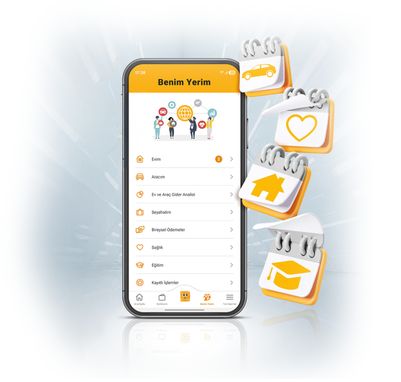
With our Vibox application, which we developed and launched for our customers in 2022, we help our customers’ children, who receive allowances in their wallets from anywhere in the world, develop a savings mindset. We enable our customers’ children to grow their savings through TL-denominated term deposit accounts, precious metals, and foreign currencies. Additionally, we continue to offer our customers great convenience in their daily financial transactions with the “My Place” menu. We enable our customers to manage all expenses related to their homes and vehicles from a single screen and to easily track payments such as bills, rent, maintenance fees, taxes, and HGS (Fast Pass System). In addition, we strategically expanded our remote customer acquisition process in 2025 to include users engaged in agricultural activities, alongside the retail and commercial segments. With the improvements we made in our processes, we achieved an increase in the rate of customers acquired through VakıfBank Mobile, in line with our targets.
In 2025, we combined our customers’ financial summaries of their transactions throughout the year related to our Bank’s products and services with product recommendations tailored to their needs, creating an entertaining experience. We aim to make this work available in our mobile application.
Number of Digital Banking Customers
√ It has been subjected to limited assurance by the Independent Audit Firm.
We are aware that the services we provide through digitalization reduce our customers’ carbon footprints. With the digital solutions we offer, we indirectly contribute to combating climate change. Throughout 2025, we focused on leveraging new technologies while centering on the user experience. With the innovative solutions we implemented during this process, we continuously improved the digital banking experience, elevating the user experience to a more dynamic and customizable structure. The services we developed also significantly lightened the operational workload in our branches. As a result, we achieved an increase in efficiency in both our digital and physical channels.
In the upcoming period, we will continue to lead innovation with our technological infrastructure, products, and applications. Keeping our customers at the center, we will continue to take steps to offer more accessible, faster, and need-oriented services; we will remain committed to creating solutions that add value to our customers’ lives through our digital channels.
GRI 3-3
Operating with the motto “Digital makes it easier,” we continuously research methods to make our products and services more efficient, accessible, useful, better at meeting needs, and of higher quality by evaluating our customers’ needs, expectations, and experiences in conjunction with technological advancements. In this regard, we aim to establish an innovation ecosystem that will lead the sector. Thus, by contributing to our competitiveness, we enable the application of innovative solutions across all areas in response to changing conditions, rather than relying on traditional methods.
With our qualified human resources and innovative vision, we closely follow developments in information technology, strengthening our commitment to the technologies that are shaping the future of banking. Using advanced technologies such as artificial intelligence, machine learning, and big data, we are undertaking projects focused on operational efficiency and customer satisfaction.
Thanks to our competent human resources and innovative approach, we closely monitor the transformation in information technologies and develop products and solutions that add value to the sector. Our commitment to the technologies shaping the future of banking forms the foundation of our sustainable success. Focusing on advanced technologies such as artificial intelligence, machine learning, and big data, we implement innovative projects that increase efficiency and enhance the customer experience.
By integrating R&D data specially prepared using artificial intelligence for our Bank’s insurance sales calls into our operational processes, we adopted a data-driven approach to our sales. As a result of the effective use of this data set, we increased our conversion rate on insurance sales calls from 5% to 8%. This performance improvement has made a measurable and meaningful contribution to our insurance production results. Through this study, we aimed to analyze our customers’ needs more accurately, increase the effectiveness of our sales processes, and enhance operational efficiency. At the same time, we made a significant contribution to promoting a data-driven decision-making culture at our Bank.
We are modernizing our banking practices to meet contemporary requirements. We raised the prediction threshold for our artificial intelligence forecasting automation from 40% to 60%. This has increased the automation success rate for requests routed for forecasting.
We are modernizing our banking practices to meet contemporary requirements. We are transforming our core banking applications into modern, web-based structures, prioritizing the user experience. With this transformation, we are responding to our customers’ needs more quickly and effectively, maximizing customer satisfaction by offering all the advantages of digital banking.
Aware of the strategic importance of data, we not only see it as a resource but also effectively analyze it to transform it into valuable information. By placing importance on data analytics, information security, and data management, we ensure that data is used accurately, securely, and efficiently. We prioritize improving data quality and, to this end, aim to enhance self-service reporting, decision support tools, and data analyst roles in business units, increase data governance and architectural maturity, and facilitate data access and discovery. By doing so, we strengthen our banking services by making smarter, faster, and more reliable decisions at every step.
To enhance competition-oriented technology adoption, we are increasing our competencies and applications related to technologies that support mobile, contactless, and self-service products, as well as business intelligence, data analytics, artificial intelligence, open banking, cloud, DevOps, smart automation, and blockchain-based digital currencies. We support and accelerate initiatives that improve the customer experience, reduce and/or simplify customer effort, and support passwordless and biometric transactions.
Through our efforts to improve our Bank’s operational processes, we have made digitalization an internal transformation philosophy. In 2025, we continued to monitor operational processes, centralize transactions, incorporate manual control points into our systems, and integrate the latest technologies into our processes to improve the quality of service our customers receive from our Bank, increase the efficiency of our sales-oriented structure, reduce transaction and labor costs, and lighten the operational burden on our units and branches. We closely follow technological developments and use big data, artificial intelligence, data analytics, open banking, and robotic process automation in our business processes. Furthermore, through our efforts, we not only expand the uninterrupted service we provide to our customers but also increase our operational efficiency, thereby solidifying our competitive strength in the sector. In 2025, we launched the virtual assistant that we had begun developing earlier, enabling our branch employees to communicate digitally with and obtain information from operational units. Thanks to C-Bot, which is integrated with the Bilio Support application, our branches can not only obtain information but also submit priority requests regarding their transactions to the operations center and receive real-time responses. As a result, we reduced phone traffic for our operations center employees, increasing their productivity in transaction-focused tasks. We continue to develop the Virtual Assistant, which we are currently piloting in our Bank’s units, Regional Directorates, and 30 branches, based on feedback, and we aim to roll it out across the Bank shortly.
We continue our efforts in data analytics and our investments in competent human resources in this field. We are taking steps to retain our qualified human capital and enhance their competencies. We are making improvements that reduce process and tool complexity to increase agility and productivity.
We continued our agile transformation journey in 2025 as well. In this context, we discussed the Bank’s agile transformation process—including its goals, history, global trends, past efforts, and future plans—in meetings that brought together our senior management and agile teams. Additionally, we conducted an Agile Maturity Survey across 73 teams. Based on the results, we identified our teams’ maturity levels and areas for development, prepared training sets accordingly, and submitted reports on the process to our senior management. In addition, we launched pilot projects with business units to establish a collaborative work culture and ensure alignment between processes.
We also procured solutions to perform the bank’s data analytics, modeling, and decision-tree processes using more effective and up-to-date technologies.
In connection with our R&D activities, we filed one patent application in 2025. The application processes for all three are still ongoing. Additionally, by managing the subsequent processes of our applications from previous years, we registered one of them during the year. To share the outputs of our R&D activities, we prepared the article titled “A Hybrid EfficientNet–OCR Framework for Robust Document Orientation Detection in Banking Systems” in collaboration with Sakarya University’s Faculty of Computer and Information Sciences and brought it to the journal submission stage. Furthermore, in 2025, we made a total of six applications under the R&D Center Award and Incentive System Regulation: five for the Education Incentive and one for the Patent Incentive.
As part of the “Science for Stronger Societies (SCIENCE&FUTURE)” project, supported by the Marie Skłodowska-Curie Actions (MSCA) program—a component of Horizon Europe (2021–2027), the European Union’s key funding program for research and innovation—we participated in the “European Researchers’ Night” event held at Sakarya University on September 26, 2025, on behalf of the VakıfBank R&D and Innovation Center, and delivered presentations on “Sustainability and Finance.”
Through the TÜBİTAK BİGG Program, we aimed to support entrepreneurs from the idea stage to market entry, helping them transform their technology- and innovation-focused business ideas into enterprises with high potential to create added value and skilled employment. In this three-stage program, entrepreneurs will complete each stage sequentially and, if deemed eligible, will advance to the next stage. In the first stage of the program, Implementing Organizations designated by TÜBİTAK will ensure that entrepreneurial business ideas they deem suitable are developed into robust business plans through acceleration programs they will carry out using original, effective, and implementable mechanisms. In this context, the application submitted as the Implementing Organization to the TÜBİTAK 1601 Program 2026–2028 BiGG Stage 1 Acceleration Program Call, together with Sakarya Teknokent, Kocaeli University, and Bartın University, was accepted by TÜBİTAK.
As in previous years, we engaged in innovative activities in 2025 by holding Meetup training sessions and various workshops within the Bank. In this context, we provided Prompt Engineering Training in two separate sessions for analysts with three or more years of experience at EBİS. In line with our adopted Artificial Intelligence Approach, the R&D and Innovation Directorate held a workshop for EBİS employees on key considerations during the idea generation, application development, and implementation stages of artificial intelligence. Additionally, this meetup on innovative technologies expected to become trends in the upcoming period, facilitated by R&D and Gartner, was organized by our R&D and Innovation Directorate. We also organized workshops with various units of our Bank, such as the Cash Management Department, Field Management Department, Digital Banking Department, Customer Contact Center Department, Customer Satisfaction and Solution Center Department, Credit Allocation Management and Coordination Department, Bancassurance Department, and Human Resources Department, to discuss the applications of artificial intelligence and design thinking.
With the goal of becoming the leading bank of a strong Türkiye, we continuously offer customer-focused, innovative products and services. While making the most of the opportunities offered by digital banking, we are also aware of the risks that this transformation entails. We are developing robust defense mechanisms against cyber attacks, ensuring the security of all data, and implementing strong security measures for personal data protection. The steps we take to ensure data security not only enhance the reliability of our services but also improve customer satisfaction and the quality of the digital experience. In the upcoming period, we will continue to offer a more secure banking experience by prioritizing technology, security, and customer focus.
GRI 3-3
Three key factors stand out when determining our security strategies. The first and most important is our Bank’s strategies, the second is risk areas and attack surfaces, and the third is regulations.
We strive to effectively combat threats by considering regulations, digitalization, and increasing data volumes. We turn regulations into opportunities to create security strategies that are aligned with our Bank’s strategies and support our business practices.
We closely monitor legislation published by regulatory authorities and carry out the necessary compliance work. We have completed the necessary work to comply with the Regulation on Information Systems of Banks and Electronic Banking Services and the Information and Communication Security Guide published by the Presidency of the Republic of Türkiye Digital Transformation Office.
We made the necessary plans and, in line with those plans, completed the related work to ensure compliance with the Communiqué on the criteria to be met for identity verification and transaction security in electronic banking services and when establishing contractual relations in the electronic environment, published by the BRSA.
We also successfully completed audits such as the SWIFT Customer Security Framework and the Revenue Administration’s Private Integrator Audit. Additionally, we successfully completed surveillance audits for the ISO 27001 Information Security Management System and the ISO 22301 Business Continuity Management System, ensuring the continuity of the respective certifications.
By obtaining the ISO 27701 certification, we have demonstrated the compliance of our personal data management systems with international standards and the importance we place on data privacy for our customers, business partners, and stakeholders, while also integrating our privacy policy system into group-wide risk and compliance management. In this context, “The privacy policy is applied to all operations, including suppliers.”
In accordance with the Personal Data Protection Law, we ensure that necessary disclosures are made and that explicit consents are obtained across all our channels as part of our obligation to inform. We also provide our customers with a transparent reporting environment in this regard. Each customer may view their contracts related to Personal Data Protection by directly contacting our branches and requesting them. In this context, we periodically destroy customer information for customers who no longer have a relationship with our Bank. Accordingly, we carry out the necessary work to ensure the security of our customers across all our channels and manage processes effectively through a designated person or unit responsible for privacy matters. In this context, both internal and third-party (external) audits regarding privacy policy compliance are conducted regularly. Furthermore, we adopt a zero-tolerance approach to privacy breaches and apply disciplinary sanctions in case of violations. At the same time, we provide informational training to our employees under Personal Data Protection and ensure that all employees receive mandatory privacy training at least once a year. We have taken proactive measures in data security through data discovery, data classification, secure file sharing, and data loss prevention programs. In 2025, 926 of our employees received “In-class Information Security Training,” while 17,321 people benefited from the “PDPL E-Learning Training on Personal Data Protection.”
We conducted the penetration tests required by applicable legislation in full and completed our management reporting on a regular basis. By increasing penetration testing activities with internal resources as part of internal projects, we significantly enhanced our security maturity levels and reduced our dependence on external firms.
We have systematized our proactive approaches to detecting and preventing malicious software by leveraging artificial intelligence methods and technologies. Thus, we have established significant levels of protection against potential internal and external attacks on the Bank’s systems.
We developed our own training programs using the Bank’s internal resources and artificial intelligence models and assigned them to employees. We have noticeably increased awareness among our personnel and their families regarding both Information Security and Business Continuity.
Our business practices, valuable assets, and the sectors we operate in are among the main factors shaping threats and risks. We view the financial sector as a whole, not only as banks but also as the suppliers and infrastructure contractors that serve them.
We are carrying out significant work to manage business continuity risks. We have completed the necessary investments to address DDoS threats arising from increased data processing volumes and heavy traffic. We are collaborating with operators on this issue. Additionally, during this period, as part of disaster management, we increased the capacity of our mobile branches and completed work to establish backup support for our branch network.
We are a target for cyber attackers, especially considering our country’s geopolitical location. Although significant efforts have been made under European Union harmonization legislation, we have come to accept that the situation has escalated to the level of a cyberterrorism risk, and we are taking a holistic approach. Cyber intelligence sharing between countries is crucial in this regard. Accordingly, we have made significant investments in cyber threat intelligence. Within this scope, we have also completed the necessary work to block malicious traffic originating from abroad.
We are undertaking additional initiatives to protect brand value, which is among the most critical risks in the financial sector. Issues related to data breaches, particularly when customers’ awareness is taken into account, have started to affect reputation and brand value more than ever. Unlike other sectors, we operate with the awareness that even the smallest mistake can have significant financial consequences.
When considering risk areas, another important topic that stands out is mobile banking. With the introduction of legislation supporting remote customer acquisition, the increase in customer numbers is becoming more apparent day by day. This, in turn, leads to a variety of fraud incidents. We are making considerable efforts to raise our customers’ awareness. Due to the increase in fraud during this period, we evaluated and implemented AI-based corporate fraud solutions for our Bank.
During the previous period, one of our most important topics was the use of artificial intelligence. Especially since ChatGPT became available to end users, we have begun to observe cases of the tool being used for harmful purposes. As VakıfBank, we have also taken the necessary precautions against these.
Additionally, the increasing volume of data processing and the emphasis on sustainability have driven remarkable developments in cloud technologies. In this context, many security vendors have started to move their solutions to the cloud. We are creating strategies to the extent permitted by regulations, in line with sustainability, scalability, and operational costs, especially considering security software.
In the upcoming period, it appears that cyber risks, along with environmental and climate risks, will continue to increase and remain a top-level concern in our lives. We are aware that we can overcome all these risks by tackling them with a holistic approach. As in every field, our human resources are our biggest advantage in this regard. We also recognize that when it comes to managing cyber risks, human resources are at the center of the people, process and technology axis.
You can access our Bank’s Privacy Policy on our website here.
GRI 3-3
GRI 3-3